
Azure Standard
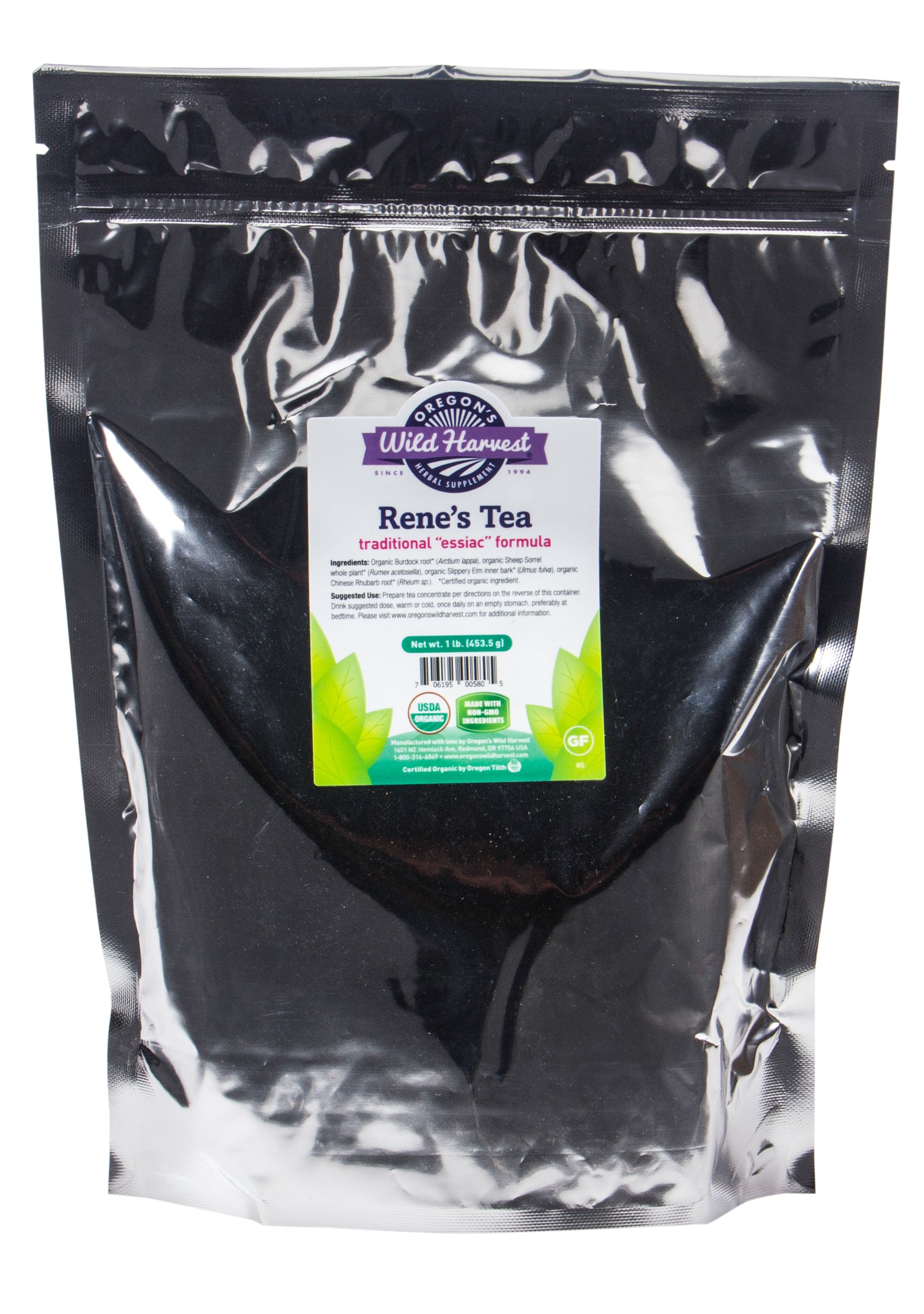
Rene's Tea (Essiac), Organic
Couldn't load pickup availability
A certified organic tea blend of herbs that are carefully dried cut and blended in small batches according to a traditional recipe.
- Traditional "essiac" formula
- Product Features
- Gluten-Free
- GMO-Free
- 100% Vegetarian
- Pure: No Artificial Ingredients
This widely used traditional formula originated from a Canadian nurse in the 1920's. This nurse, Rene Caisse, developed her formula for ‘essiac tea' from an herbal mixture was shared by an Ontario Indian medicine man. Caisse in turn went on to share this formula with many of her patients and fellow health care practitioners.
Burdock is valued in many cultures for its safety and effectiveness. The root, leaves and seeds were known to the ancient Greeks as healing remedies. With the exception of Chinese traditional medicine which employs seeds, it is the roots that are used today as both a food and a traditional medicine. Its popularity as a food is increasing as more people turn to macrobiotic diet.
Sheep Sorrel has historically been used as a culinary herb and spring tonic. In Turkey it is used for anemia and as an appetite stimulant.
Slippery Elm is native to eastern Canada, and the eastern and central United States, where it is found mostly in the Appalachian Mountains. Its name refers to the soothing slippery consistency the inner bark assumes when it is chewed or mixed with water. Native American healers have used the dried inner bark of Slippery Elm trees for centuries, internally and externally.
From 1820 to 1960, the bark was listed in the U.S. Pharmacopoeia as a demulcent, emollient and antitussive. Slippery Elm has been used in Ayurvedic and Traditional Chinese Medicine for gastrointestinal symptoms.
Rhubarb is often recommended by herbalists as a component of spring tonics or blood cleansing cures (e.g., Swedish bitters) in Europe. In traditional Chinese medicine (TCM), Chinese rhubarb is listed in the Chinese Pharmacopoeia where it documents the use of rhubarb for a traditional ulcer remedy. It is considered a bitter, cold, dry herb used to "clear heat" from the liver, stomach and blood . Medicinal rhubarb arrived in Europe via Turkey, hence the common name, Turkey rhubarb.
Individuals with a history of kidney stones should use Sheep Sorrel and Rhubarb cautiously. Discontinue use in the event of diarrhea or watery stools. Keep out of reach of children. Do not use if pregnant or nursing. Discontinue if unusual symptoms occur.
This product is not intended to diagnose, treat, cure or prevent any disease. The Contraindications and Potential Drug Interactions information provided on this website is not intended to be all-inclusive. A health care professional should be consulted regarding the use of herbal products. Always keep your Doctor or other healthcare professional informed about the herbal and other dietary supplement products that you are taking.