

Azure Standard
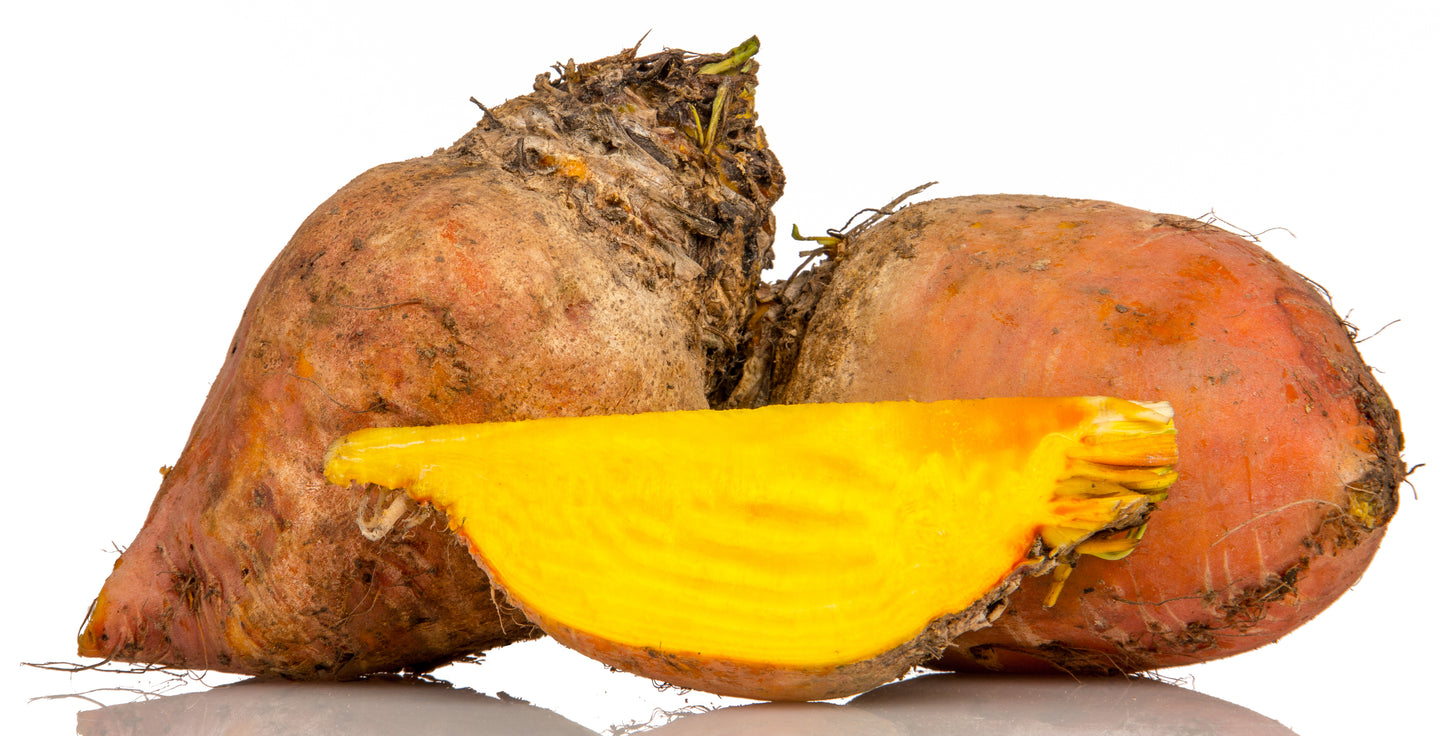
Beets, Golden Organic
Couldn't load pickup availability
Wild beets – the predecessor to the beet of today, is believed to be native to northern Africa, and then grew along the shores of Europe and Asia. Originally, they were harvested and cultivated for their greens. It wasn’t until ancient Rome that the roots were used. They traveled well, and were spread throughout Europe. At first, they were primarily used as just animal fodder.
Beets have also been a stable and good source of sugar when sugar cane is not available or wanted.
Golden beets have a milder, sweeter taste compared to their counterpart- the red beet. They are an excellent source of folate, and a good source of manganese, potassium, Vitamin C, magnesium, iron, copper, phosphorus, and fiber.
The nutrients in beets are degraded by heat and are mostly soluble in water, so cooking the least amount as possible is ideal.
Even though the beet seems to be a hardy, tough vegetable, it is actually pretty fragile. Bruises and small pokes or gouges will cause them to bleed (losing valuable nutrients)- especially when cooked in liquid.
To store beets, cut the greens from the roots so moisture is not drawn out of the root- leave roughly 2 inches of stem attached to the root. Store the roots and greens in separate bags, and squeeze as much air out of the bags as possible. Greens will last 4-5 days, while the roots can last up to 3 weeks.
Note: We do our best to ship quality produce to Alaska and Hawaii, but due to unknown conditions at the barge lines, we cannot guarantee the quality on arrival.